Tuesday, 26 December 2017

Is the God of the Bible compatible with morality?


Raymond D. Bradley, Emeritus Professor of Philosophy at Simon Fraser University, in an article titled A Moral Argument for Atheism (1999, see @ infidels.org) gives this definition of objective morality [some believe that it would be more appropriate to speak of "universal morality"]:

[By objective morality] [w]e mean a set of moral truths that would remain true no matter what any individual or social group thought or desired.

He goes on to give a few examples of moral principles that he considers to be paradigms of objective moral truths:

P1: It is morally wrong to deliberately and mercilessly slaughter men, women, and children who are innocent of any serious wrongdoing.

P2. It is morally wrong to provide one's troops with young women captives with the prospect of their being used as sex-slaves.

P3. It is morally wrong to make people cannibalize their friends and family.

P4. It is morally wrong to practise human sacrifice, by burning or otherwise.

P5. It is morally wrong to torture people endlessly for their beliefs.

For each of the 5 above principles, Bradley give examples, from the Bible, whereby the God of the Bible would have repeatedly infringed each and every one of them:

I1. In violation of P1, for instance, God himself drowned the whole human race except Noah and his family [Gen. 7:23]; he punished King David for carrying out a census that he himself had ordered and then complied with David's request that others be punished instead of him by sending a plague to kill 70,000 people [II Sam. 24:1-15]; and he commanded Joshua to kill old and young, little children, maidens, and women (the inhabitants of some 31 kingdoms) while pursuing his genocidal practices of ethnic cleansing in the lands that orthodox Jews still regard as part of Greater Israel [see Josh., chapter 10 in particular]. These are just three out of hundreds of examples of God's violations of P1.

I2. In violation of P2, after commanding soldiers to slaughter all the Midianite men, women, and young boys without mercy, God permitted the soldiers to use the 32,000 surviving virgins for themselves. [Num. 31:17-18].

I3. In violation of P3, God repeatedly says he has made, or will make, people cannibalize their own children, husbands, wives, parents, and friends because they haven't obeyed him. [Lev 26:29, Deut 28:53-57, Jer 19:9, Ezek 5:10]

I4. In violation of P4, God condoned Jephthah's act in sacrificing his only child as a burnt offering to God [Judg. 11:30-39].

I5. Finally, in violation of P5, God's own sacrificial "Lamb," Jesus, will watch as he tortures most members of the human race for ever and ever, mainly because they haven't believed in him. The book of Revelation tells us that "everyone whose name has not been written from the foundation of the world in the book of life of the Lamb who has been slain" [Rev. 13:8] will go to Hell where they "will be tormented with fire and brimstone in the presence of the holy angels and in the presence of the Lamb; and the smoke of their torment goes up forever and ever: and they have no rest day or night" [Rev. 14:10-11].

In regard to I4, some have adopted the strategy of denying that Judges 11:30-39 speaks at all of Jephthah "sacrificing his only child as a burnt offering to God", but it would "only" be relative to Jephthah dedicating his daughter to the service of the Tabernacle at Shiloh as "sacred prostitute". Apart from the rather dubious morality and compatibility with the dictates of the God of the Bible of this imaginative hypothesis, let's leave aside this specific discussion, and let's concentrate on the 4 other points.

In his article, Raymond D. Bradley goes on to say that biblical theists are confronted with a logical quandary which strikes at the very heart of their belief that the God of Scripture is holy.

According to Bradley they cannot, without contradiction, believe all four of the statements:

(1) Any act that God commits, causes, commands, or condones is morally permissible.
(2) The Bible reveals to us many of the acts that God commits, causes, commands, and condones.
(3) It is morally impermissible for anyone to commit, cause, command, or condone, acts that violate our moral principles. [that is the principles exemplified by P1-5]
(4) The Bible tells us that God does in fact commit, cause, command, or condone, acts that violate our moral principles.

The trouble—comments Bradley— is that these statements form an inconsistent tetrad such that from any three one can validly infer the falsity of the remaining one. Thus, one can coherently assert (1), (2), and (3) only at the cost of giving up (4); assert (2), (3), and (4) only at the cost of giving up (1); and so on.

For a detailed exam and argument, see section D: A logical quandary for theists: an inconsistent tetrad.

You can look at David Bradley's article in detail.

For my part here are some observations (1, 2, 3) and counter-observations (1a, 2a, 3a):

1. The notion that the god of the Old Testament was the monster-god, guilty of infanticide and genocide, whereas the god of the New Testament is the kinder, gentler god, is untenable. Yahweh slaughtered whole populations, but, according to standard Christian doctrine, whole populations are doomed not to death but to eternal suffering... for having the wrong beliefs or no belief. Apologists offer a smorgasbord of excuses and explanations (the penalty is not for wrong belief but for SIN... God is so holy that he cannot abide SIN... God has the right to do as he sees fit with those who remain in SIN...), but they all sound to me like fawning obsequiousness before a despot.
1a. Nobody can make positive statement on the amount of people that are destined for condemnation at the Final Judgement. And I believe that the most obvious reading of the "second death" at Rev 20:14 is pure and simple annihilation of those who had wilfully refused Life Everlasting in their earthly life, anyway.

2. The objection that we cannot hold God to human standards of good and evil is untenable. When we use words like "good" and "evil," they carry connotations that humans can understand on the basis of human parlance and experience. If it is true that we cannot hold God to human standards, then we cannot apply words like "good" to him unless we can recognise something in his actions that we recognise as good. In fact, we ought to recognise God's actions as of a character so good that we, as finite and fallible beings, could not hope to achieve the same level of goodness; but the point is that God's actions would be in the category of what we recognise as "good"--else we have no right to call them "good." Conversely, if God's actions are recognisable as "bad," we must not refrain from calling them "bad." (The Bible has something to say about calling evil good and good evil.) The Maltheists look at scriptural accounts and conclude with some logic, that God must be evil. This view is blasphemous, but it is at least honest, which is more than I can say for Christian fundamentalists who read the same accounts and piously declare that each act of infanticide and genocide attributed to God is another demonstration of God's goodness and greatness and worthiness of our worship.
2a. The only possible apology of the God of the Bible, in my view, is that not the whole Bible (OT in particular, but also NT) is truly inspired, but much of it reflects a political agenda of the authors, conveniently attributed to God, who is blameless by definition.

3. If we believe that God is good, then we must reject scriptural literalism, for such accounts, taken at face value, bespeak a god who is anything but good as we humans understand the term good, and that criterion of good is the only one we should resort to, if we are not hypocrites.
3a. More, not the whole Bible is inspired, or rather it sometimes reflects human motives, rather than divine.

Saturday, 23 December 2017

Is it appropriate to call Paul an apostle?

Conversion of Saint Paul, Caravaggio, 1601

Strictly speaking, this is the only criterion to qualify as a member of the college of the Apostles, one of the Twelve:

21 Thus one of the men who have accompanied us during all the time the Lord Jesus associated with us, 22 beginning from his baptism by John until the day he was taken up from us – one of these must become a witness of his resurrection together with us.” (Acts 1:21-22)

Paul was perfectly aware that he did not qualify.

So, in the strict sense of the word, the Apostles are the Twelve chosen directly by Jesus. In the Synoptic Gospels they are all identified, with only minor differences for Luke. The list in the Gospel of John is incomplete, but not incompatible with the Synoptics, and, in any case, in the Gospel of John, Jesus himself refers to the Apostles as "the twelve" (John 6:67-71), even three times.

The only time that Paul, in his epistles, uses the expression "the twelve", is in this passage, where Paul recognizes that ultimately his preaching of Christ's Resurrection is based on the witness of "the twelve" ...

3 For I passed on to you as of first importance what I also received – that Christ died for our sins according to the scriptures, 4 and that he was buried, and that he was raised on the third day according to the scriptures, 5 and that he appeared to Cephas, then to the twelve. 6 Then he appeared to more than five hundred of the brothers and sisters at one time, most of whom are still alive, though some have fallen asleep. 7 Then he appeared to James, then to all the apostles. 8 Last of all, as though to one born at the wrong time, he appeared to me also.  (1 Cor 15:3-8)

... and it is "what [he] also received" from them.

It is important to notice that Paul does not use the word "disciple" (mathētēs), which is not used either in the LXX or in the Epistles of the NT, but only in the Gospels and in Acts.

Jesus ONLY instituted as Apostles Twelve people, who were his original disciples.

If we look at the Gospels and at Acts, we find only a hint of a special apparition to Cephas (Luke 24:33-34), we do not find any mention of a special apparition to James, let alone an apparition to "five hundred of the brothers [and sisters] at the same time". On the other hand, the Gospel of Luke has an extensive account of an appartition to two disciples at Emmaus (Luke 24:13-35). In the Gospel of John, the Twelve are not referred to as Apostles but as disciples (John 20). We know that they were the Twelve (actually, only Eleven, because, obviously, Judas Iscariot was not there), because we read that Thomas Dydimus, who is explicitly referred to as "one of the Twelve", refused to believe what "the other disciples" affirmed to have seen when he was absent (John 20:24-25).

One week later, the same "disciples" (again, mathētai; John 20:26-29), this time with Thomas Dydimus, saw the Resurrected Lord Jesus Christ.

In conclusion, in spite of Paul's inconsistencies, it stands to reason that the expression "the Twelve" refers to the original group of Twelve Apostles hand-picked by Jesus.

Tuesday, 19 December 2017

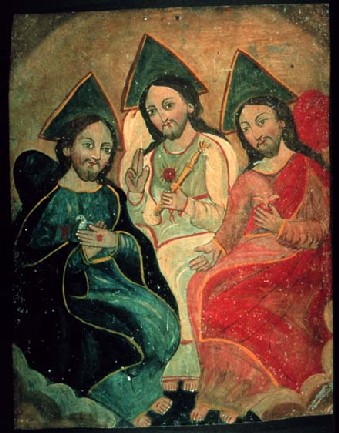
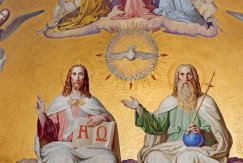
How do you "see" the "trinity"?

I know, God is pure spirit, unthinkable, unimaginable.

Nevertheless, as we all know, Christianity [actually, the (in)famous Cappadocian scoundrels] has managed to both express a metaphysical thought about God's essence ...

"one substance (ousia) in three persons (hypostaseis)"

... and to express this "thought" in an image ... ...

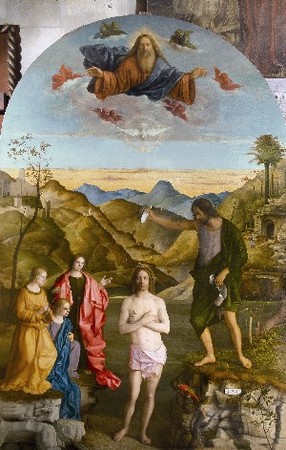
Yes, I know, "God is not a man" (Num 23:19), and, nevertheless, images with an old bearded man, with Jesus and with a dove are recurrent, to express the compresence of the "trinity" at the  Baptism ...

Baptism of Christ, by Giovanni Bellini (1500-02)
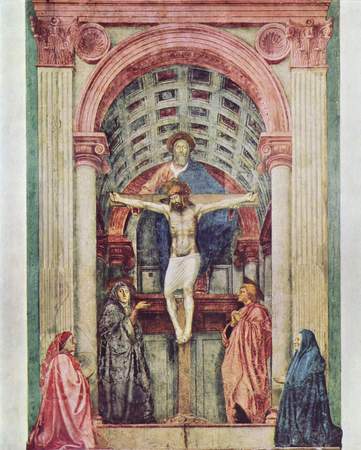
... and at the Crucifixion ...

Masaccio's Trinity (Santa Maria Novella, Florence)
So, if in your musings you ever think of the "trinitarian god" as expressed by human figure(s), do you see it best represented by

1. Three faces representing God the Father, Son, and Spirit, fused together and sharing one neck and connected to one body?

Santísima Trinidad, attributed to Gregorio Vásquez de Arce y Ceballos (ca. 1680)
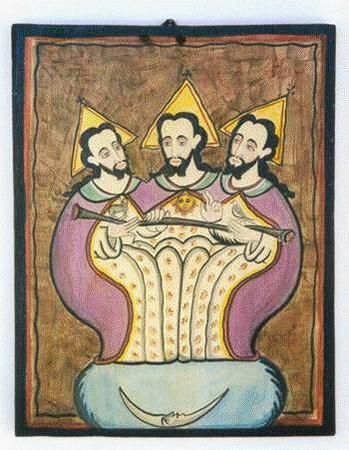
2. Three faces (and three heads) fully separated, each one having their own neck but connected to a single almost "pregnant looking" body. In both cases, the Unity (one body) and Identity (Three Faces) struggle to portray the often abstract theological and doctrinal truths about the Trinity?

La Santisima Trinidad (James Cordova, 1995)
3. Three faces/heads but each one now with their own separated bodies?

Representation of the trinity (Philippines)
To remain in the ... er ... "trinitarian" spirit of the post, please choose only one of the above ...

Sunday, 17 December 2017

John Calvin, Jesus Christ and the Archangel Michael


It is a well known fact that, after Charles Taze Russell presented his teaching on the subject, JWs entertain the idea that the "pre-incarnated Christ" is one and the same as the Archangel Michael.

What few people know is that the historical writings of many protestant trinitarians show that  even many of them have claimed that Jesus Christ is Michael the Archangel. See here:

“The earlier Protestant scholars usually identified Michael with the preincarnate Christ, finding support for their view, not only in the juxtaposition of the "child" and the archangel in Rev. 12, but also in the attributes ascribed to him in Daniel (...).” — John A. Lees, The International Standard Bible Encyclopedia, 1930, Vol. 3, page 2048. [online entry: Michael, (11) @ bibletools.org]

Among the "Protestant scholars" who "identified Michael with the preincarnate Christ" you may (be more or less surprised to) find Theodore Beza, John Wesley, Adam Clarke, John Gill, Matthew Henry ...

What even fewer people know is that the Protestant reformer John Calvin, on the orthodoxy of whose trinitarian doctrine nobody dared and dares cast even the hint of a doubt, not only entertained the idea that Jesus Christ is Michael the Archangel, BUT, rather disconcertingly, he even changed his mind, on this subject, literally from one day to the next.

Lo and behold.

In 1561, John Calvin wrote a Commentary on Daniel in two volumes, dedicated respectively to the first 6 and to the last 6 chapters or the Book of Daniel.

See what happened with this verse:

“At that time Michael, the great prince who watches over your people, will arise. There will be a time of distress unlike any other from the nation’s beginning up to that time. But at that time your own people, all those whose names are found written in the book, will escape.” (Dan 12:1)

First, in his comment immediately appended to the verse, Calvin writes ...

By Michael many agree in understanding Christ as the head of the Church. But if it seems better to understand Michael as the archangel, this sense will prove suitable, for under Christ as the head, angels are the guardians of the Church. Whichever be the true meaning, God was the preserver of his Church by the hand of his only-begotten Son, and because the angels are under the government of Christ, he might entrust this duty to Michael. — John Calvin, Commentary on Daniel, Vol.2 (1561), Chapter 12, Daniel 12:1 [bolding by MdS]

... so, in spite of what "many agree in understanding", Calvin considers it "suitable" to read Michael as ... Michael, and Christ ONLY indirectly referred to, "as the head" ...

Then, after a duly pious Prayer (Lecture 64), Calvin expresses his ... er ... rather revised (actually reversed) thought ...

“As we stated yesterday, Michael may mean an angel; but I embrace the opinion of those who refer this to the person of Christ, because it suits the subject best to represent him as standing forward for the defense of his elect people.” — John Calvin, Commentary on Daniel, Vol.2 (1561), Chapter 12, Lecture Sixty Fifth

... so, having ... slept on it, now Calvin prefers to read Michael as ... Christ ...

Does also the reverse apply, that is, does Calvin believe that Christ is none other than the Archangel Michael?

Well, of course this would be rather hard to reconcile with Calvin's famous trinitarian orthodoxy ...

... but, anyway ...

... your comments are welcome ...

What did Judas betray, and why did he betray it?

Kiss of Judas (1304–06), fresco by Giotto, Scrovegni Chapel, Padua, Italy

It is simply too trivial to affirm that Judas betrayed Jesus' location. It was all too easy for the Jewish authorities (as well as for the Romans) to keep under watch his whereabouts. Besides, the Gethsemane is a place where "Jesus had met there many times with his disciples" (John 18:2)

It is not true that Jesus openly claimed to be the Messiah. He NEVER claimed it openly, but reserved this claim (or, to be precise, the non-denial of this claim) ONLY to the strict circle of his Apostles.

ONLY when Joseph Caiaphas interrogated him, after Judas' betrayal, on his claim to Messiahship ...

But Jesus was silent. The high priest said to him, “I charge you under oath by the living God, tell us if you are the Christ, the Son of God.” (Matt 26:63)

...  Jesus immediately and openly admitted that he was the Messiah, BUT in a heavenly, eschatological sense:

Jesus said to him, “You have said it yourself. But I tell you, from now on you will see the Son of Man sitting at the right hand of the Power and coming on the clouds of heaven.” (Matt 26:64; cp. Ps 110:1, Dan 7:13)

This, BTW, is Bart Ehrman's conclusion (see The lost Gospel of Judas Iscariot, 2006, chapter 10, What Did Judas Betray and Why Did He Betray It?)

The early disciples tried to make Judas' betrayal more "acceptable" by seeing it inscribed in the Scripture. Not only Zechariah (Zech 11:12-13), BTW, but also Jeremiah (Jer 32:9 - who, though, speaks of "seven ounces of silver"), the latter being explicitly quoted in Matt 27:9-10, although Matthew confuses and conflates the two OT prophets.

The Gospels don't even try to veil the unbelievable cowardice of the disciples, although Peter, almost to redeem himself in advance of his triple denial, even resorts to the sword.

Jesus had already foretold Peter's cowardice and denial, but, in spite of all this, he reaffirmed that this would not affect his choice of Peter as leader of the Apostles ...

31 “Simon, Simon, pay attention! Satan has demanded to have you all, to sift you like wheat, 32 but I have prayed for you, Simon, that your faith may not fail. When you have turned back, strengthen your brothers.” 33 But Peter said to him, “Lord, I am ready to go with you both to prison and to death!” 34 Jesus replied, “I tell you, Peter, the rooster will not crow today until you have denied three times that you know me.” (Luke 22:31-34)

... because Jesus also knew that it was only a temporary moment of confusion and weakness, on Peter's part.

In conclusion Judas betrayed to the Sanhedrin Jesus' secret Messiahship. Why did he do it? My guess (only my guess) is that Judas had serious doubts about Jesus' Messiahship, and wanted to put him in a situation whereby he would prove who he secretly claimed to be. Or succumb ...

Thursday, 14 December 2017

Judaeo-Christians


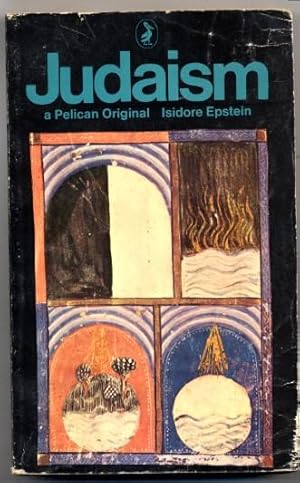
“The crucifixion of Jesus put an end to all political-national hopes which his followers had pinned on him. Instead they turned to apocalypse for an explanation of his death and sought to reassure themselves by exalting him into a heavenly Messiah who was to reappear speedily on earth as a supernatural ruler. Thus arose in that century [1st century EV] the Judaeo-Christian sect which in time tore itself away from Judaism to found the Christian Church. The earliest adherents of this sect were Jews in all respects but one - they regarded Jesus as the Messiah. They made no other changes. They continued to go to the Temple, and presumably to the Synagogue, as they had been accustomed to do, and to all appearances conformed in every respect to the usual Jewish observances. Their belief that the Messiah had come was not a ground of division between them and other Jews. But  within a few decades the Christian church under the influence of Paul was altering its conception of Jesus in a way that meant that he was no longer thought as merely human, and implied that he was in fact a second God - a belief which was a denial of the unity [uniqueness?] of God as Jews understood the term. Once this development had taken place accommodation of Jewish Christians within Judaism was no longer possible and the final rift between the two became inevitable.”
-- Isidore Epstein, Judaism, Ch. 11, "The Second Hebrew Commonwealth", p. 107, Penguin Books, UK, 1959

 Any comments?

Saturday, 2 December 2017

Two Catholic theologians on "trinity" and "pre-existence"


This is what Edmund J. Fortman (d. 1990), a highly respected Catholic theologian wrote in his exhaustive study on the Trinity:

The formulation of this dogma was the most important theological achievement of the first five centuries of the Church ... yet this monumental dogma, celebrated in the liturgy by the recitation of the Nicene creed, seems to many even within the Church to be a museum piece, with little or no relevance to the crucial problems of contemporary life and thought. And to those outside the Church, the trinitarian dogma is a fine illustration of the absurd length to which theology has been carried, a bizarre formula of ‘sacred arithmetic.’ -- Edmund J. Fortman,  The Triune God (New York: Baker Book House, 1972, p. xiii).

This is how Catholic theologian Karl-Josef Kuschel addresses the question and cornerstone Trinitarian belief of the pre-existence of Jesus Christ:

Anyone who does not approach the New Testament with a prior concept of pre-existence moulded by the history of dogma, but listens to what the New Testament has to say on this matter, will not fail to note that the New Testament does not know of pre-existence as a speculative theme.  A pre-existence Christology understood as isolated, independent, atomized reflection on a divine being of Jesus Christ ‘in’ or ‘alongside’ God before the world, a sonship in metaphysical terms, is not the concern of the New Testament.  On the contrary, such a pre-existence Christology must be relativized in the light of the New Testament. -- Karl-Josef Kuschel, Born before all time? The dispute over Christ's Origin, translated by John Bowden, London 1992 (SCM Press) and New York 1992 (Crossroad).

Any comments?